
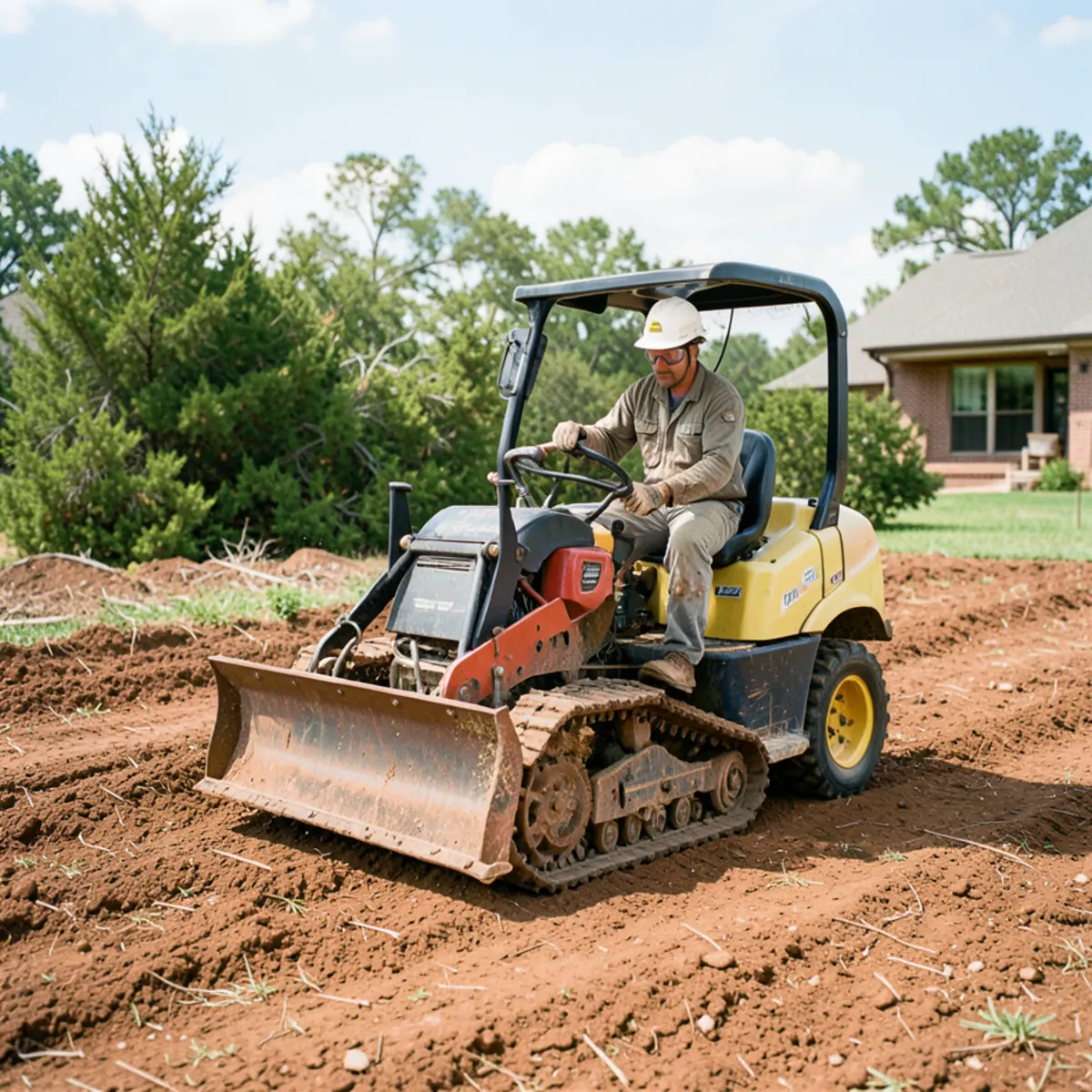
Land & Lot Clearing Near Fort Worth, TX
Heavy-duty acreage and lot clearing across Tarrant and Parker counties: low-impact forestry mulching, cedar and mesquite eradication, fence line clearing, and custom home site prep.
Professional Land & Lot Clearing Across Fort Worth & Tarrant County
When you need land clearing fort worth, connecting with an experienced, well-equipped local tree care specialist ensures the job is done safely and correctly. Whether addressing hazardous limbs overhanging your roof, deadwood from severe summer droughts, or complete sectional dismantling of oversized trees, experienced local tree crews provide controlled operations, transparent pricing, and complete property cleanup.
Signs Your Tree Requires Immediate Professional Attention
Recognizing structural defects and biological failure early prevents sudden property damage and hazardous limb drops.
Dense Ashe Juniper (Cedar) & Mesquite Overgrowth
Thickets of water-consuming Ashe juniper and thorny honey mesquite crowding out native grasses and pasture land.
Unnavigable Rural Parcels & Surveying Obstacles
Overgrown brush, greenbrier vines, and deadfall preventing civil engineers, surveyors, or prospective buyers from walking boundaries.
Overgrown Fence Lines & Access Roads
Foliage and brush destroying barbwire fencing, blocking livestock lanes, and limiting tractor or emergency vehicle access.
Severe Wildfire Fuel Accumulation
Volatile resinous cedar stands creating dangerous wildfire fuel ladders adjacent to rural homes and outbuildings.
Local Environmental Factors Driving Tree Stress in Fort Worth
- •Historic fire suppression allowing aggressive Ashe juniper (mountain cedar) to dominate western Cross Timbers acreage.
- •High-density residential development expanding across former ranch land in Parker County (Aledo, Weatherford) and southern Johnson County.
- •Invasive thorny brush choking intermittent creek beds, ravines, and stock tank dams.
- •Need for rapid, low-impact site preparation that preserves mature heritage live oaks and post oaks.
Operational Techniques & Equipment Trade-Offs
Every property in Fort Worth presents unique logistical considerations, from narrow rear alleys in North Richland Hills to wide acreage in Aledo. Independent contractors evaluate which method delivers maximum safety and efficiency:
Forestry Mulching (Low-Impact Single-Pass)
High-speed rotary drum mulchers shred trees and brush directly into an organic mulch blanket. Zero burn permits, zero topsoil disturbance, and immediate erosion control.
Excavator & Bulldozer Grubbing
Essential for commercial pad sites and roadways where root balls must be completely extracted. Requires heavy equipment and haul-off, with higher soil disruption.
Selective Underbrush Clearing
Precision clearing of scrub brush and cedar while deliberately preserving mature native live oaks and pecans. Ideal for custom estate home sites.
What a Contractor Inspects on Site
During your on-site evaluation, the responding tree care specialist conducts a rigorous physical assessment before generating your written quote:
- Total acreage and vegetative density: light brush, thick cedar canopy, or heavy hardwood timber.
- Topography and ground conditions: steep rocky limestone slopes, ravines, wet creek beds, or flat pastures.
- Soil conservation criteria: minimizing topsoil erosion and avoiding root compaction near designated save-trees.
- Access points for heavy machinery: tracked forestry mulchers, excavators, and dump trucks.
- Disposal strategy: mulching material in-place vs. piling and hauling.
Ready for an On-Site Tree Evaluation?
Free to call with zero obligation. Connected directly with a local tree pro.
Call (321) 677-9055The Land & Lot Clearing Process: What to Expect
A transparent, step-by-step workflow from your initial telephone call to final yard raking.
Step 1: Property Walk & Save-Tree Flagging
Contractor walks the acreage with you, mapping boundary fence lines, survey stakes, access corridors, and marking heritage live oaks and post oaks designated for strict preservation.
Step 2: Heavy Equipment Delivery & Staging
Tracked rotary forestry mulchers, compact track loaders, and support equipment are transported to the site, staging designated ingress routes to prevent soil compaction.
Step 3: Low-Impact Mechanical Forestry Mulching
High-speed rotary drum mulchers shred dense stands of Ashe juniper (cedar), mesquite, greenbrier, and scrub brush directly into an organic, erosion-controlling mulch carpet.
Step 4: Excavator Grubbing & Selective Thinning
Where building pads or roads are planned, excavator thumbs extract taproots and boulders. Around designated save-trees, operators perform low-impact selective underbrush thinning.
Step 5: Corridor Grade Inspection & Final Walk
Work corridors, survey lines, and driveways are verified clear of vegetative debris. Fence perimeters are inspected, leaving the land fully navigable, fire-safe, and walk-ready.
What Drives Land & Lot Clearing Costs in Fort Worth?
Tree service pricing is never one-size-fits-all. Published local market averages provide helpful guidance, but final costs require a physical on-site assessment.
Key Pricing Drivers
Typical Regional Price Benchmarks
Published typical local ranges for the Fort Worth / Tarrant County market. Final price determined after on-site evaluation:
Ideal for walking trails, firebreaks, and thinning light brush between mature hardwoods.
Typical North Texas acreage overgrowth with dense Ashe juniper up to 6 inches in diameter.
Includes complete root extraction, heavy timber clearing, and pad preparation for home building.
Where We Dispatch Land & Lot Clearing Crews
Connecting property owners across our ~35-minute service radius from west Fort Worth:
Land & Lot Clearing in Aledo
Parker County acreage parcels, ranchettes, and custom home sites
Land & Lot Clearing in Weatherford
Dense cedar and mesquite clearing on rural acreage tracts
Land & Lot Clearing in Keller
Large estate lots and horse properties requiring underbrush clearing
Land & Lot Clearing in Mansfield
Walnut Creek fringe acreage and expansion development parcels
Land & Lot Clearing in Benbrook
Western rocky terrain parcels near Dutch Branch and Lake Benbrook
Land & Lot Clearing in Arlington
Commercial outparcel clearing and infill development site prep
Land & Lot Clearing in North Richland Hills
Suburban infill lots and commercial expansion corridors
Related Tree Care Services
Related Local Research Guides
Land & Lot Clearing Frequently Asked Questions
Straightforward answers regarding land & lot clearing processes, city regulations, and estimates in Fort Worth.
What is forestry mulching and how does it benefit North Texas land?
Can land clearing contractors save specific heritage oak trees on my lot?
How much does land clearing cost per acre near Fort Worth?
Do I need a permit to clear land in Parker or Tarrant County?
What is the best way to get rid of invasive mesquite and cedar?
Request Your Free On-Site Land & Lot Clearing Estimate
Call (321) 677-9055 today. Connect with an independent local tree contractor serving your specific Fort Worth or Tarrant County neighborhood.