
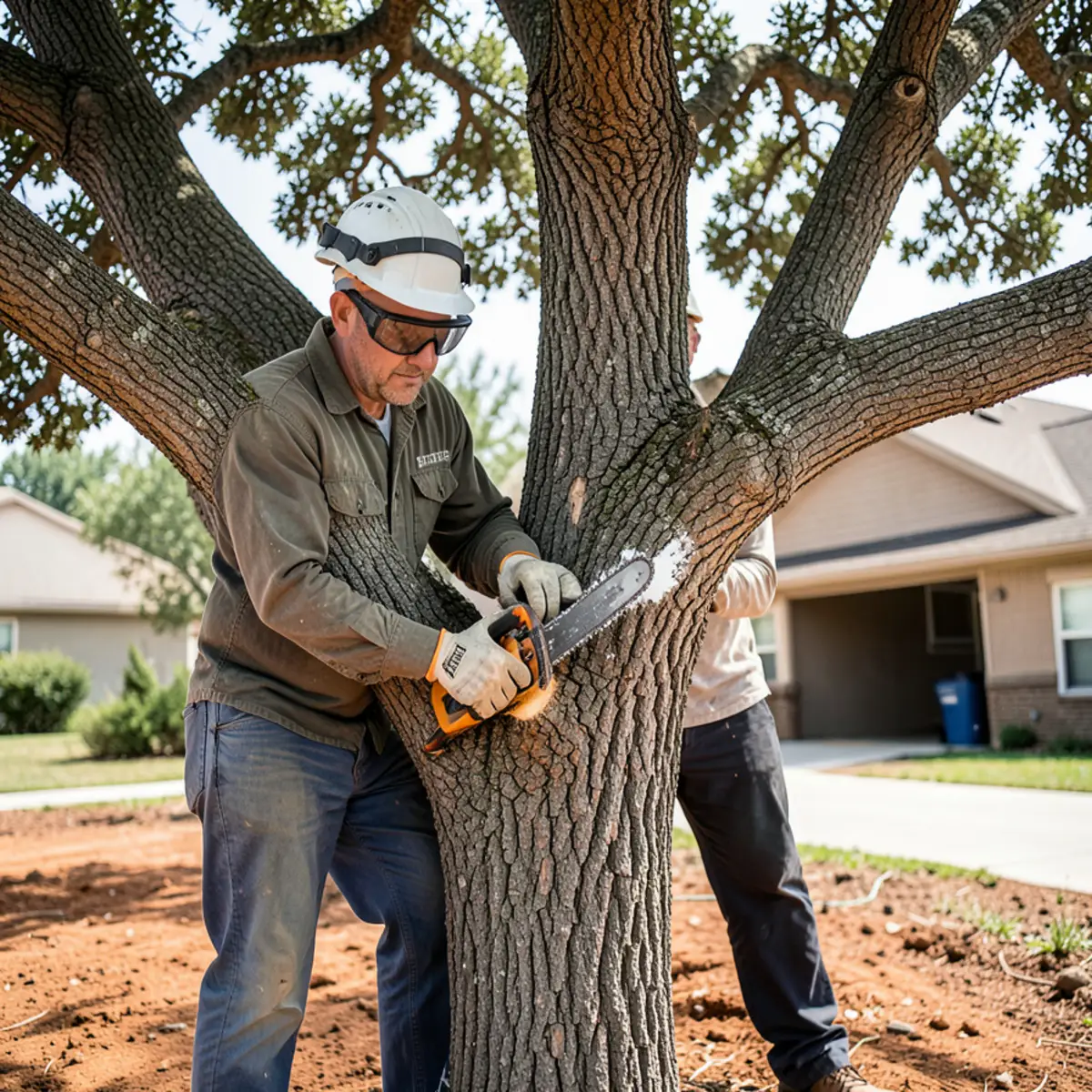
Direct Answer & Local Summary
In North Texas, the safest time to trim oak trees (including live oaks, post oaks, and red oaks) is during dormant mid-winter, specifically from November 1 through January 31, or during the extreme heat of mid-summer (July and August). Property owners should strictly avoid trimming oaks between February 15 and June 15. During this spring window, nitidulid sap beetles are most active and oak wilt fungal spore mats are producing spores; beetles are attracted to the sweet sap flowing from fresh pruning wounds, transmitting the deadly fungus. If an oak limb breaks during a spring storm and emergency trimming is unavoidable, every cut must be sealed immediately with commercial pruning paint or black spray paint.
Key Takeaways for Property Owners
- •Strict 'No-Prune' Window: Avoid all non-emergency oak trimming between February 15 and June 15.
- •Safest Pruning Window: November through January, when trees are dormant and beetles are inactive.
- •Immediate Wound Sealing: Apply pruning paint or black lacquer within minutes of making any cut on an oak.
- •Sanitize Tools: Disinfect chainsaws and loppers with 70% isopropyl alcohol between trees.
The Texas A&M Seasonal Oak Pruning Calendar
To safeguard the North Texas oak canopy, Texas A&M Forest Service developed a definitive pruning calendar based on decades of entomological research into nitidulid beetle flight patterns:
• February 15 to June 15 (STRICTLY PROHIBITED): High-risk window. Nitidulid beetles emerge and fungal mats sporulate. Do not prune oaks unless life safety or structural clearance requires emergency action.
• July 1 to October 31 (SAFE): Mid-summer heat and low sap-beetle activity make pruning acceptable, though drought-stressed trees should only receive light deadwooding.
• November 1 to January 31 (OPTIMAL): Prime pruning window. Trees are completely dormant, energy reserves are stored in root systems, and cold weather prevents beetle flight.
Need Tree Assistance in Fort Worth?
Free telephone connection with independent local tree service pros.
The Role of Nitidulid Sap Beetles in Oak Infection
Nitidulid beetles (often called sap beetles or picnic beetles) are tiny insects measuring just 2 to 4 millimeters. They possess keen olfactory senses that detect fresh sap oozing from newly cut oak wood up to a mile away.
If a beetle visits a sporulating oak wilt mat on an infected red oak and subsequently lands on your fresh tree cut within 24 to 48 hours, it deposits microscopic fungal spores directly into the tree's open vascular xylem.
Why Wound Paint is Mandatory on Oak Species in Texas
While modern arboriculture generally discourages wound paint on non-oak tree species (because it can seal in moisture and decay fungi), oak trees in Texas are the universal exception.
Pruning paint or any non-toxic black spray paint creates an immediate physical barrier that masks the smell of sap and prevents beetles from contacting open vessels. To be effective, paint must be applied immediately—within minutes of cutting.
Tool Sterilization Protocols Between Trees
Professional tree service contractors sterilize chainsaw bars, hand saws, and pole pruners with a 70 percent isopropyl alcohol solution or quaternary ammonium disinfectant between individual trees.
This critical step ensures that fungal spores or bacterial wetwood pathogens are not mechanically transferred from one tree to the next.
Expert Pruning Insights: Proper Branch Collar Cuts and Crown Density Ratios
Beyond timing your oak pruning to avoid the February 15 to June 15 high-risk window, proper cutting technique is crucial for tree longevity. Never make flush cuts against the trunk; always prune just outside the branch bark ridge and branch collar to allow natural wound sealing (compartmentalization).
Furthermore, avoid lion-tailing—the harmful practice of stripping all interior foliage and leaving tufts at branch tips. Industry ANSI A300 standards recommend removing no more than 15 to 20 percent of living foliage in a single pruning cycle, ensuring the tree retains adequate photosynthetic capacity to withstand Texas summer droughts.
Frequently Asked Questions: When to Trim Oak Trees in North Texas (and When Not To)
Straightforward answers grounded in Texas municipal codes, insurance standards, and regional forestry guidelines.
Can I trim oak trees in March or April if I use wound paint immediately?
What kind of paint should I use on freshly trimmed oak branches?
How much of an oak tree canopy can safely be pruned at one time?
RAM Tree Service Editorial Desk · Fort Worth, TX
Researched from municipal forestry ordinances, Texas A&M Forest Service data, and ISA arboricultural standards. For on-site estimates, call our dispatch line at (321) 677-9055.
Official References & Forestry Authorities Cited
Our editorial team consults municipal codes, state forestry extensions, and industry standards to ensure guidance reflects current North Texas conditions:
- •Texas A&M Forest Service: Oak Wilt Prevention & Pruning GuidelinesScientific guidelines on pruning windows and wound sealants across Texas.
- •Entomological Society of America: Biology of Nitidulid Beetles and Oak Wilt TransmissionPeer-reviewed research on vector flight behavior and temperature correlations.
- •City of Fort Worth Park & Recreation Forestry: Urban Tree Canopy Maintenance StandardsMunicipal forestry recommendations for oak care in Tarrant County.